How to Choose the Right Dedicated Servers for Your Business in 2026?
Choosing the right dedicated servers for your business is crucial in 2026. In recent years, the demand for dedicated servers has surged. According to market research, the global dedicated server market is projected to reach $33 billion by 2026. This growth reflects a rising need for enhanced performance, security, and data management.
Many businesses struggle to select the right server type. Factors like scalability, processing power, and hardware specifications play a key role in this choice. A recent report highlighted that 70% of companies faced challenges with their server performance. Without proper assessment, companies may find themselves with inadequate resources, leading to inefficiencies.
Moreover, the importance of uptime cannot be overstated. Statistics indicate that businesses lose an average of $5,600 per minute of downtime. This underlines the potential risk of poorly selected dedicated servers. Careful consideration of current and future needs is essential. Businesses must not overlook crucial details in their server selection process. Achieving optimal performance requires thoughtful planning and reflection.

Understanding Your Business Requirements for Dedicated Servers
When choosing dedicated servers for your business, start by assessing specific requirements. Consider how much data you handle daily. High traffic websites need powerful servers to ensure smooth performance. Think about the types of applications you will run. Some may require more processing power than others.
Next, evaluate your security needs. Sensitive information demands robust security measures. A strong server can help protect against potential breaches. You might also need to consider the level of technical support you want. If your team lacks expertise, a responsive support team is essential.
It’s worth noting that budgeting is critical. Some businesses overspend on unnecessary features. Reflect on what truly benefits your operations. This can prevent you from making costly mistakes. Always revisit your needs as your business evolves. What works today might not be suitable tomorrow.
Evaluating Performance Needs: CPU, RAM, and Storage Considerations
When selecting dedicated servers for your business, performance requirements are crucial.
The CPU, RAM, and storage speed can significantly affect operations. Assessing these elements will help ensure your server meets your needs.
A processor with multiple cores can handle demanding applications more efficiently.
Tips: Look for processors with higher clock speeds.
They can drastically improve performance for single-threaded tasks. Also, consider the architecture of the CPU.
Newer architectures usually provide better performance per watt.
RAM is equally important. For most businesses,
16GB of RAM is a reasonable starting point. However, high-traffic sites or resource-intensive applications may require more,
like 32GB or even 64GB. Keep in mind that higher capacity RAM can reduce response times but will increase costs.
Tips: Opt for faster RAM speeds, as they can enhance performance.
Don't overlook the balance between cost and benefit. Sometimes, adding more basic RAM may be better than investing in faster options that offer negligible improvements.
Finally, storage solutions should not be an afterthought.
Solid State Drives (SSDs) provide faster data access compared to traditional Hard Disk Drives (HDDs).
This can impact load times and overall performance.
Tips: Assess your data access patterns.
This can help determine if SSDs or a combination of both SSD and HDD is ideal for your situation.
Keep an eye on future needs too; scalability is vital in a growing business environment.
Comparing Pricing Models and Budgeting for Dedicated Servers
When budgeting for dedicated servers in 2026, understanding pricing models is crucial. Most providers offer several options. You might see monthly subscriptions, pay-as-you-go, or one-time purchase models. Each has its pros and cons. Monthly plans can provide flexibility, but might end up costing more over time.
Here are some tips to consider. Look for hidden costs. Setup fees or maintenance charges can affect your budget. Be cautious about bandwidth overages. They can sneak up on you. Also, think about scalability. Can the server grow with your business? If not, adapting later may cost you even more.
Another point to reflect on is the long-term investment. Upfront costs can be high. But a reliable server can save you money later. For small businesses, choosing the right capacity is important. You don’t want to pay for unused resources. However, underestimating needs can impact performance. Balance is key in this decision-making process.
Dedicated Server Pricing Models Comparison in 2026
This chart illustrates the monthly pricing of various dedicated server models for 2026, showcasing how costs can vary based on server specifications and service levels. The Basic model represents the most affordable option, while the Enterprise model offers the highest capabilities at a premium price point.
Assessing Provider Reliability and Customer Support Options
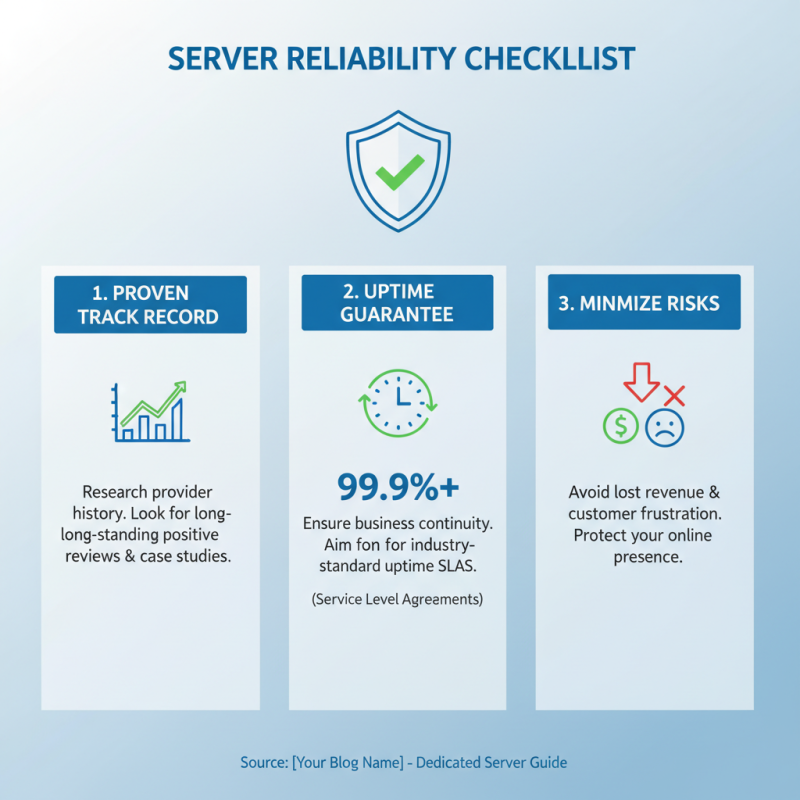
When selecting a dedicated server, it’s vital to evaluate provider reliability thoroughly. A reliable provider should have a proven track record. Look for uptime guarantees. Ideally, aim for 99.9% uptime or higher. This ensures your business runs smoothly. Frequent outages can lead to lost revenue and customer frustration.
Customer support is equally essential. Think about the types of support available. Some companies only offer email support. This can delay problem-solving. Live chat or phone support is more effective. Also, consider response times. Slow responses can hinder your operations. Investigate reviews from existing customers. This can reveal potential issues.
Additionally, don’t overlook the importance of scalability. As your business grows, your server needs may change. It’s crucial to choose a provider that can accommodate this growth. A lack of options may force you to switch providers later, which is disruptive. Exploring these factors deeply can help you make a well-informed choice.
Exploring Scalability and Future-Proofing for Growth Needs
Choosing the right dedicated servers is crucial for business growth, especially in 2026. Scalability is a key factor. As reports indicate, 70% of businesses will need more server capacity in the next few years due to rising data demands. This makes it important to select solutions that can grow with your needs.
An effective strategy is to consider future-proofing. Businesses should look for servers that support cloud integration. According to industry data, companies using hybrid cloud solutions can experience up to 40% faster data recovery. This can significantly reduce downtime during unexpected issues.
Tips: Evaluate your current traffic patterns. Select a server that allows easy upgrades. Regularly assess performance metrics to avoid bottlenecks. Remember, scalability isn't just about size; it’s about flexibility. Sometimes, a more modest server with the right features can outshine larger, less adaptive options. Be prepared to rethink your choices as technology evolves.
How to Choose the Right Dedicated Servers for Your Business in 2026? - Exploring Scalability and Future-Proofing for Growth Needs
| Parameter |
Description |
Importance for Growth |
| CPU Options |
Variety of CPU types for different workloads |
Enables efficient processing for scaling applications |
| RAM Capacity |
Amount of memory available for tasks |
Supports multitasking and resource-intensive processes |
| Storage Type |
SSD vs HDD options for data storage |
Fast access speeds enhance performance |
| Bandwidth Allocation |
Amount of data transfer included |
Critical for high-traffic applications |
| Scalability Options |
Possibility to increase resources on demand |
Essential for growing businesses to handle workload fluctuations |
| Redundancy Features |
Backup systems to prevent data loss |
Ensures business continuity and reliability |
| Technical Support |
Availability of IT support and services |
Critical for resolving issues quickly |

 Overwhelmed? We're here to help.