How to Choose the Best Storage Dedicated Servers for Your Business Needs?
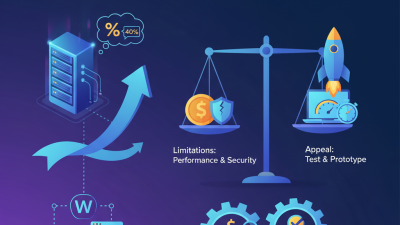
Choosing the right storage dedicated servers is crucial for your business. These specialized servers offer enhanced performance and security. They cater to companies with varying storage needs. A robust server can boost efficiency significantly.
Consider factors like storage capacity, speed, and reliability. Think about what your business demands. Does it require large amounts of data storage? Or perhaps, high-speed access is the priority? The decision can be overwhelming.
Reflect on your current and future needs. Don’t rush the choice. Take time to evaluate different options. Some servers may seem ideal but may not suit your growth plans. Identify your pain points. Better storage solutions can prevent future headaches.
Understanding Storage Dedicated Servers and Their Benefits
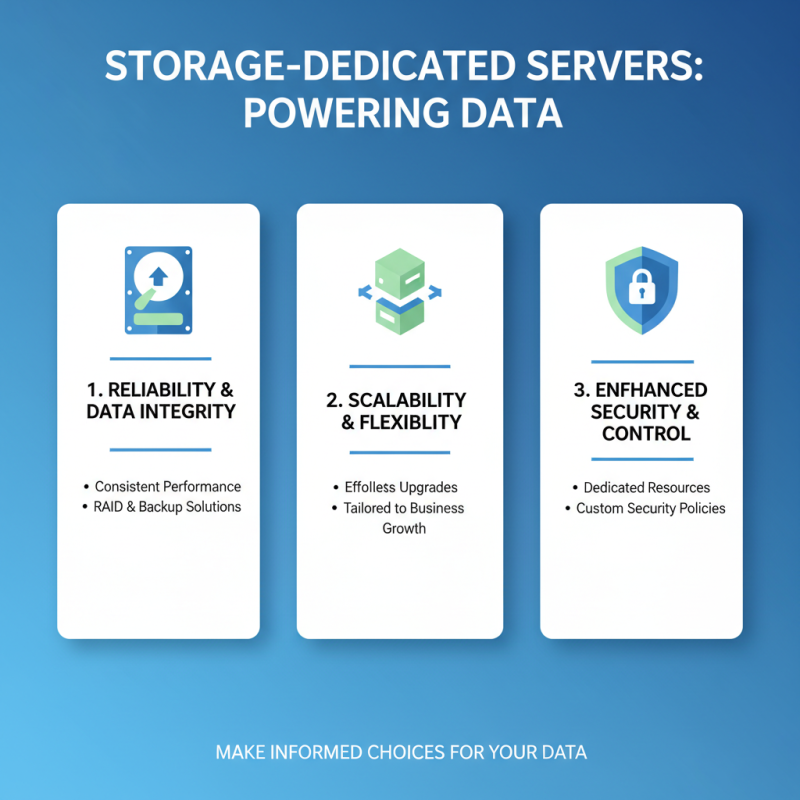
Storage dedicated servers are crucial for managing large amounts of data. They provide reliable and scalable solutions tailored to your business needs. Understanding their benefits can help you make informed choices.
One significant advantage of storage dedicated servers is data security. They offer enhanced protection for sensitive information. Moreover, they ensure better uptime compared to shared servers. This reliability is essential for businesses that rely on constant access to data.
Here are a few tips when choosing a storage dedicated server. Assess your data needs carefully. How much storage will you require? Don’t underestimate potential growth, as data needs can expand rapidly. Consider redundancy options for data backup. This practice can save you from data loss. Lastly, think about the server's scalability. You want it to grow with your business, not hold you back.
Key Factors to Consider When Choosing a Storage Dedicated Server
When selecting a storage dedicated server for your business, several key factors come into play. First, consider your storage capacity needs. Evaluate the amount of data you regularly process. Think about future growth as well. A server that seems sufficient today might quickly fall short. Missing the mark could lead to costly upgrades later.
Next, analyze the server's performance specifications. Read about CPU, RAM, and I/O capabilities. These elements are crucial for data retrieval speeds. A sluggish server can adversely affect operations. It's easy to overlook this aspect, but it can have lasting repercussions. Also, assess the server's scalability options. Can it adapt to increasing demands? Being locked into a rigid server can hinder your business.
Lastly, think about security features. Ensure the server provides robust data protection. Evaluate backup solutions as well. Neglecting security can lead to severe data breaches. In the digital age, trust is paramount. Finally, don’t forget support and maintenance services. A responsive team can save time and headaches. Budget for these necessities too. Ignoring any of these factors may lead to regret down the line.
How to Choose the Best Storage Dedicated Servers for Your Business Needs? - Key Factors to Consider When Choosing a Storage Dedicated Server
| Key Factors |
Details |
Importance Level |
| Storage Type |
SSD vs HDD - SSDs offer faster data access speeds; HDDs are cost-effective for large volumes. |
High |
| Capacity |
Determine your current and future data storage needs to select the appropriate capacity. |
Medium |
| RAID Configuration |
Mirroring and striping techniques for data redundancy and performance enhancement. |
High |
| Backup Solutions |
Ensure your data is backed up regularly to prevent loss in case of failure. |
High |
| Scalability |
Choose servers that can be easily upgraded as your storage needs grow. |
Medium |
| Network Connectivity |
Consider the bandwidth and speed of the server's network interfaces. |
Medium |
| Support and Maintenance |
Evaluate the technical support, warranty, and maintenance services offered. |
High |
Evaluating Performance Metrics of Storage Dedicated Servers
When evaluating the performance metrics of storage dedicated servers, several key factors come into play. IOPS, or Input/Output Operations Per Second, is vital for businesses needing fast data access. Reports show that enterprises benefit from servers with a minimum of 10,000 IOPS for optimal performance. Disk latency also matters; lower latency leads to quicker data retrieval, enhancing overall efficiency. Ideal latency figures are often below 5 milliseconds.
Bandwidth is another critical element. A server with high bandwidth can transfer more data at once. Recent studies indicate that businesses see significant performance improvements with bandwidth over 1 Gbps. Furthermore, RAID configuration can impact reliability and speed. For example, RAID 10 offers redundancy and improved read/write speeds, making it suitable for data-intensive tasks.
However, pricing can be a catch. High-performance configurations tend to cost more. Businesses must weigh cost against their data needs. Not every company requires the highest specs. Evaluating actual workload requirements can save money and optimize performance. Risk and reward are an ongoing challenge in this decision-making process.
Assessing Scalability and Flexibility for Future Business Needs
When choosing storage dedicated servers, scalability and flexibility hold vital importance. According to a report by Gartner, 74% of IT leaders cite scalability as a key factor in their infrastructure decisions. Businesses grow faster than anticipated, and server needs shift quickly. If the servers cannot scale, operations may suffer. Having the ability to quickly add or resize storage can prevent bottlenecks.
Flexibility plays a similar role. Businesses often require custom configurations. A study from IDC shows that 45% of companies rely on tailored solutions to match specific workloads. The inability to adapt can lead to wasted resources. Companies need solutions that evolve alongside their growth. It’s not just about storage capacity; it’s about meeting changing demands.
Investing in servers that limit scalability might feel cost-effective initially. But in the long run, this can hinder growth. Companies must continuously evaluate their needs. Being aware of changing market trends is crucial. Seek solutions that can pivot as needed. Ultimately, the right dedicated servers can empower businesses to thrive amid uncertainty.
Comparing Cost Structures and Pricing Models of Storage Solutions
When selecting storage dedicated servers, understanding cost structures is crucial. Research indicates that around 45% of businesses face challenges in budgeting for data storage. The pricing models can vary significantly. For example, some providers offer tiered pricing based on storage needs. This can result in vastly different costs for similar capacities.
Many organizations assume lower upfront costs equal better savings. However, hidden fees often emerge. Industry reports show that over 30% of companies encounter unexpected charges while using cloud storage. Features like data redundancy or backup services often drive the price higher. It is essential to evaluate what is included in the package.
The average monthly cost for dedicated storage servers ranges from $100 to over $500. This broad spectrum reflects the variety in service levels and performance capabilities. Businesses should assess their storage usage patterns. Understanding these can lead to more accurate budget forecasts. Many end up paying for excess capacity they do not utilize. This is an area where reflection is necessary.
Comparison of Storage Dedicated Servers Cost Structures

 Overwhelmed? We're here to help.