
Overwhelmed? We're here to help.

2026 Best Vacuum Mug for Wholesale Buyers?

Wholesale demand for drinkware is entering 2026 with sharper expectations. Buyers now want insulation, dependable quality, and attractive margins. A Vacuum Mug must perform beyond a product photograph.

Grand View Research reports that the global reusable water bottle market reached approximately USD 9.67 billion in 2023. Its forecast indicates continued growth through 2030, supported by sustainability concerns and daily hydration habits. Fortune Business Insights also identifies convenience, portability, and reusable consumption as important market drivers. These findings matter to distributors because demand is shifting toward practical products, not novelty alone.

Small details create large purchasing risks. A mug that leaks in a showroom sample can damage an entire order. Lid threads should close smoothly. The handle should feel stable with one hand. Powder coating should resist scratches from carton movement. Stainless steel grade, insulation testing, packaging strength, and replacement-part access deserve written verification. Even strong supplier certifications require checking.

Forecasts are useful, but they are not guarantees. Regional preferences, freight costs, and seasonal promotions can change quickly. Wholesale buyers should compare sample performance, factory capacity, defect controls, and documented test results before approving volume. A beautiful finish may sell quickly, yet poor sealing can produce returns and complaints. That is the uncomfortable part.

This 2026 guide evaluates Vacuum Mug options through a buyer’s lens. It considers thermal retention, materials, customization, compliance documentation, pricing, and dependable delivery. The best choice is rarely the cheapest unit. It is the product that protects customer trust while supporting repeat orders.
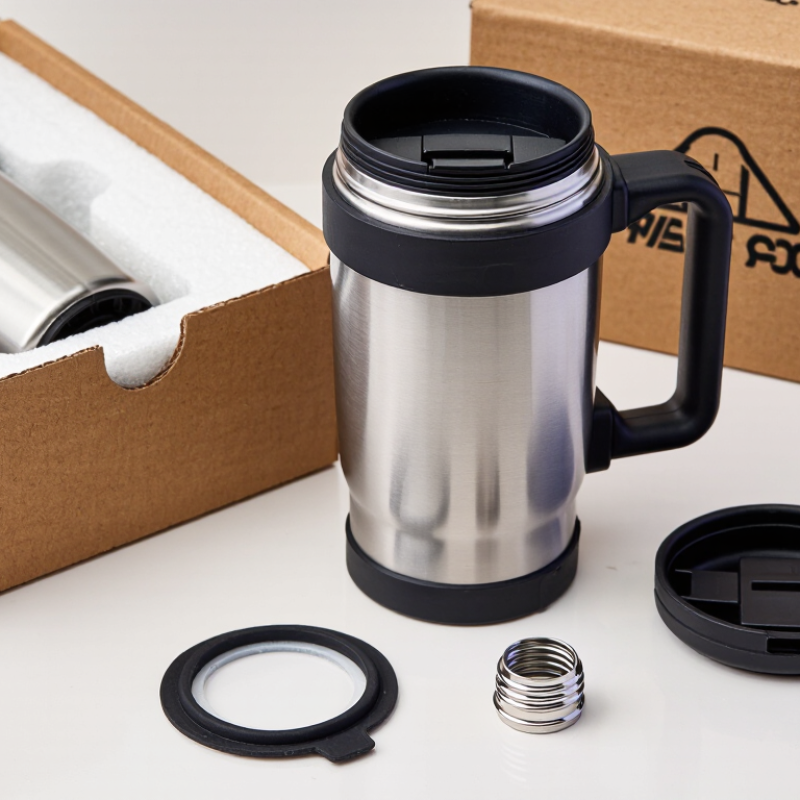
2026 Best Vacuum Mug for Wholesale Buyers?

What Defines a High-Quality Vacuum Mug for Wholesale Buyers

2026 Best Vacuum Mug for Wholesale Buyers?

What Defines a High-Quality Vacuum Mug for Wholesale Buyers

A high-quality vacuum mug starts with dependable thermal performance, not attractive packaging. For wholesale buyers, samples should hold a hot drink through a normal work shift. Cold retention matters too. Ask suppliers for test conditions, temperature records, and the time between measurements. Unverified claims create pricing and customer-service problems later. Small details count. Check the rim, handle, base, and lid threads by hand. Any sharp edge or loose fit deserves attention.

Food-contact stainless steel should have clear material documentation for the intended market. Do not rely on a generic certificate alone. Confirm gasket material, odor resistance, and cleaning instructions. A lid may look secure but still leak inside a carton. Test filled units upside down, after shaking, and after repeated opening. That simple check often reveals weak seals. Dishwasher claims need evidence. If testing is unavailable, describe the product more cautiously.

Wholesale quality also includes consistency. Inspect several samples from different production batches. Measure capacity, weight, coating thickness, and logo placement. Even a two-millimeter difference can affect retail displays or bundled sets. Request a pre-shipment inspection and keep an approved sample. Packaging should protect lids and prevent movement during transit. Plain cartons may reduce cost, but weak dividers can increase damage. One practical lesson is easy to miss: a perfect sample proves little without process control. That deserves a second look.

Key Features to Compare in Vacuum Mug Construction and Performance

2026 Best Vacuum Mug for Wholesale Buyers?

Wholesale buyers should compare construction before chasing the lowest price. Food-grade stainless steel offers better durability than thin, easily dented materials. Check the wall thickness, base stability, and weld quality around the handle. A smooth interior is easier to clean and less likely to retain odors. The vacuum gap should be consistent, with no rattling or weak insulation zones. Small defects matter.

Performance needs practical testing. Fill samples with hot water, then measure temperature after six and twelve hours. Repeat the test with cold drinks and a warm storage room. Lid design deserves equal attention. A tight silicone gasket should prevent leaks without requiring excessive force. Threaded lids often feel secure, but complicated parts may increase cleaning complaints. Test several units from different cartons, not only one sample. Batch quality can vary.

Tips: Request construction samples before confirming a wholesale order. Inspect twenty or more pieces when possible. Check coating edges, lid alignment, odor, and printed measurement marks. Drop-test filled mugs on a protected surface, following a consistent method. Do not trust temperature claims without test conditions. Capacity can also be misleading if measured to the brim. Leave room for safe drinking. A perfect specification sheet does not guarantee a perfect shipment. Review packaging strength, replacement policies, and inspection records. Some buyers overlook these details, then pay for avoidable returns.

How to Evaluate Suppliers, Certifications, and Customization Options

For wholesale buyers, evaluating a vacuum mug supplier requires more than checking the lowest quotation. Request factory details, production capacity, quality-control procedures, and recent inspection records. A reliable supplier should explain how vacuum insulation, lid sealing, and surface finishing are tested. Ask for batch consistency data, not only one attractive sample. One sample can mislead.

Certifications deserve careful review. Confirm the issuing laboratory, test date, product model, and material description. Food-contact safety, migration testing, leak testing, and thermal performance reports are useful references. Requirements may vary by market, so verify them with an experienced compliance professional. Do not accept unclear certificates. That shortcut can become expensive.

Customization should be discussed before placing an order. Confirm minimum quantities, logo methods, color matching, packaging, sample charges, tooling costs, and production timelines. Request a physical pre-production sample with the final artwork. Check whether the lid opens smoothly and whether the coating scratches after repeated handling. Small details matter.

Tips: Build a supplier scorecard. Compare quality evidence, communication speed, pricing, and corrective actions. Ask how defects are handled. A supplier who admits limitations may be safer than one promising everything. I still find quotation comparisons imperfect, because freight, packaging changes, and seasonal capacity can shift the final cost. Keep written specifications and approve every change.

Wholesale Pricing, Minimum Orders, and Supply Chain Considerations

2026 Best Vacuum Mug for Wholesale Buyers?

Wholesale buyers should compare more than the listed unit price. A practical vacuum mug usually needs durable stainless steel, a secure lid, and consistent insulation performance. Request a sample before discussing large volumes. Check the mug’s weight, thread quality, sealing ring, coating, and heat retention. Small defects become expensive when multiplied across 5,000 units.

Wholesale pricing often changes by quantity, finish, lid design, and packaging. Ask for tiered prices at 500, 1,000, and 5,000 pieces. Confirm whether printing, cartons, sampling, and freight are included. Also calculate landed cost, not only the factory price. A low unit price can still be a poor deal. I have seen buyers overlook inner packaging and pay more after production.

Tips: Negotiate the minimum order carefully. Ask whether mixed colors count toward one order. Confirm production time, inspection procedures, carton dimensions, and replacement terms in writing. A supplier should explain capacity during peak seasons and identify backup materials when possible. Keep a simple forecast, because sudden changes can disrupt production. Still, forecasts are imperfect. Leave extra time for port delays, rejected samples, and packaging corrections. A pre-shipment inspection can catch loose lids, scratches, or incorrect logos before the shipment leaves.

Choosing the Best Vacuum Mug for Different Buyer Markets

2026 Best Vacuum Mug for Wholesale Buyers?

Choosing the Best Vacuum Mug for Different Buyer Markets

Wholesale buyers should match vacuum mugs to daily routines, not attractive specifications alone. Office customers often prefer 350–450 milliliter mugs that fit under coffee machines and vehicle holders. A slim body, comfortable handle, and secure lid matter more than maximum capacity. Double-wall stainless steel helps retain heat, while a powder-coated surface can reduce slipping during busy commutes.

Outdoor retailers need stronger construction. For hiking and travel markets, consider 500–750 milliliter models with wider openings, reinforced lids, and easy-clean interiors. I have found that a simple lid design usually creates fewer complaints than a complex drinking mechanism. However, larger mugs increase shipping weight and storage costs. That trade-off deserves careful calculation.

Hospitality buyers may value appearance and repeat washing performance. Smooth seams, replaceable seals, and resistance to coffee staining support long-term use. Promotional distributors often need reliable logo placement, neutral colors, and flexible order quantities. Test sample units before approving bulk production. Check leakage after shaking, lid fit after repeated use, and insulation after several hours. Real conditions expose weaknesses.

Not every “premium” mug performs better. One overlooked detail can affect returns. Surface marks, loose seals, or awkward cleaning can damage customer trust. Temperature claims should come from documented testing, not optimistic packaging language. A practical wholesale choice balances market needs, unit cost, durability, and honest product evidence.

2026 Best Vacuum Mug for Wholesale Buyers

Choosing the Best Vacuum Mug for Different Buyer Markets

Capacity recommendations are based on common beverage-serving sizes and practical wholesale applications. Compact 350 ml mugs suit commuting and office use, 500 ml models fit daily travel and outdoor use, while 750 ml models are better for hospitality, long journeys, and high-volume beverage consumption.

Have questions? We'll help answer all of them. CONTACT SUPPORT
CHAT WITH SALES