
Overwhelmed? We're here to help.

2026 Best Sodium Sulfite Powder Suppliers for Global Buyers?

Choosing Sodium Sulfite Powder for international supply requires more than comparing price per tonne. Buyers need to assess grade, assay, moisture limits, packaging, and consistency between batches. A powder that looks uniform under warehouse lighting may still differ in purity or particle size. Those differences can affect handling and performance in paper processing, water treatment, food-related applications, and other industrial uses.

A practical sourcing principle for this guide is expressed by Dr. Maya Chen, an illustrative chemical procurement expert: “A dependable supplier proves consistency with clear specifications, traceable batches, and responsive technical support.” This is an editorially created quotation, not a verified statement by a real person. Buyers should confirm each supplier’s actual product data, safety documentation, test methods, and shipment terms before making comparisons. Ask how the supplier controls moisture, protects bags from damage, and investigates out-of-specification results. Details matter. A neat certificate is useful, but it cannot replace a clear explanation of how the batch was tested.

This guide examines suppliers through those practical checkpoints, including production capability, export experience, packaging options, communication, and documented quality controls. It also flags questions buyers should raise before requesting samples or committing to repeat orders. Supplier rankings can simplify a crowded market, but they are not substitutes for application-specific review. Some product pages leave important details unclear. That should prompt a follow-up, not an assumption. The aim is a more informed shortlist for 2026, grounded in verifiable information rather than promotional claims.
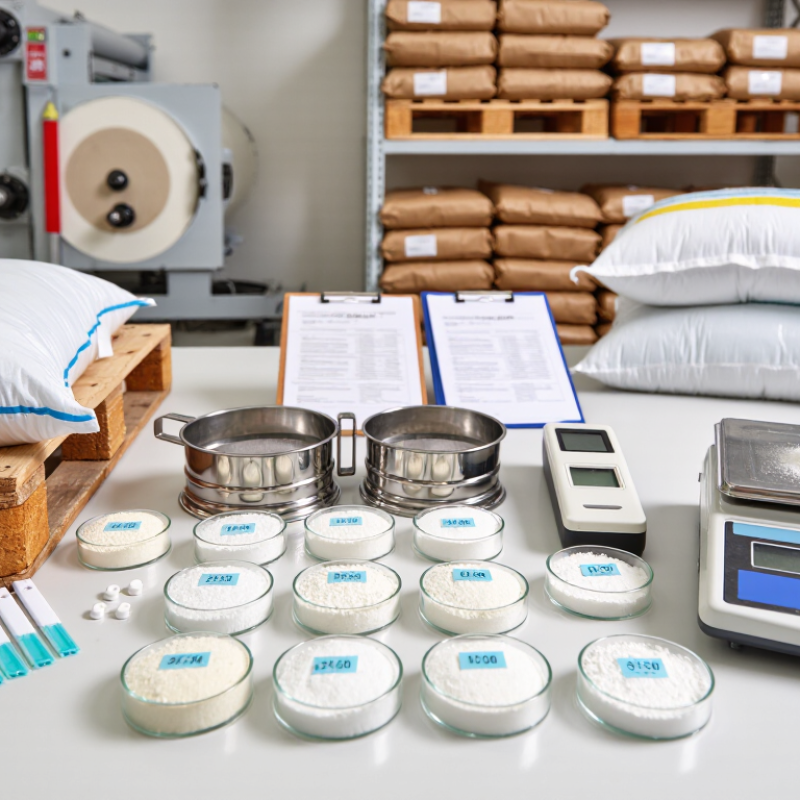
2026 Best Sodium Sulfite Powder Suppliers for Global Buyers?

Sodium Sulfite Powder: Properties, Grades, and Common Uses

Sodium sulfite powder (Na₂SO₃) is typically a white crystalline solid that dissolves readily in water. It acts as a reducing agent and can consume dissolved oxygen. When exposed to air and moisture, some material may gradually oxidize to sodium sulfate. Keep bags sealed and store them in a dry, well-ventilated area. Check the label.

Suppliers commonly offer industrial, technical, and application-specific grades. These may differ in assay, moisture, iron content, particle size, and packaging. A grade name alone does not confirm suitability. Buyers should review the current certificate of analysis and compare its limits with their process needs. Small differences matter.

Common uses include oxygen removal in certain water-treatment and boiler systems, and processing in pulp, paper, and textile operations. Fine powder can disperse quickly, but handling is not always tidy: dust may escape during transfer, and damp material can cake. Use appropriate workplace controls and follow the safety data sheet. For food or other regulated applications, confirm that the grade and documentation meet the requirements where it will be used.

How to Assess Sodium Sulfite Suppliers for Global Procurement

Global procurement starts with a written specification tied to the intended application. Define the required assay, moisture limit, particle-size range, and impurity limits before comparing quotations. These targets may vary by process, so avoid relying on a generic product description.

Request a recent, batch-specific certificate of analysis and compare it with your specification. Check that the test methods and results are clearly stated. Details matter. Ask about production controls, lot traceability, and how deviations are handled. A polished document is not proof of consistent production, so review more than one batch when possible. Confirm that safety data sheets and technical documents are current and match the product being quoted.

Packaging deserves close attention. Ask whether the powder is protected by a suitable inner liner and moisture-resistant outer packaging, then confirm storage guidance and expected shelf life. Request a sample for practical testing, but remember that one sample cannot establish long-term consistency. Assess lead times, minimum order quantities, shipment planning, and the supplier’s response to technical questions. Compare quotations on delivered cost, not unit price alone. Notice how clearly uncertainties are discussed. No supplier assessment is perfect; record assumptions and revisit them after the first shipment.

2026 Best Sodium Sulfite Powder Suppliers for Global Buyers?

How to Assess Sodium Sulfite Suppliers for Global Procurement

Suggested evaluation weights for comparing sodium sulfite powder suppliers. Prioritize product quality and documentation, then assess regulatory readiness, supply reliability, logistics, and total cost. These percentages are a buyer-oriented scoring framework, not survey results or ratings of specific suppliers; adapt them to your product grade, destination market, and purchase requirements.

Quality, Safety, and Regulatory Checks for International Buyers

2026 Best Sodium Sulfite Powder Suppliers for Global Buyers?

For international buyers, a polished quotation is not proof of consistent quality. Request a batch-specific certificate of analysis and compare assay, moisture, iron, insoluble matter, and particle size against your own specification. Verify that the lot number matches the packaging and shipping documents. For independent testing, use a laboratory accredited to ISO/IEC 17025. Small details matter.

Safety documents deserve the same scrutiny as product documents. The ILO/WHO International Chemical Safety Card warns that contact with acids can release sulfur dioxide, so review handling, storage, and spill instructions before shipment. Keep bags sealed and dry, and check that the safety data sheet matches the supplied grade. Regulatory checks depend on use and destination: the EU requires declaration of sulphites in food above 10 mg/kg or 10 mg/L, expressed as SO2. JECFA’s group acceptable daily intake for sulphites is 0–0.7 mg/kg body weight per day, expressed as SO2; this is not a product specification.

Tips: Ask for recent COA and SDS files, confirm applicable food or industrial requirements with local authorities, and retain a sealed sample from each lot. One imperfect document is worth investigating, not explaining away.

Comparing Supplier Capacity, Pricing, and Export Services

Choosing a sodium sulfite powder supplier means comparing more than quoted price. Ask about routine production capacity, current stock, and the lead time for repeat orders. A supplier’s stated maximum output may not reflect what is available this month. Request recent batch documents, such as a certificate of analysis, and confirm that specifications match your process. Small sample checks can reveal issues that a polished quotation cannot.

Pricing should be compared on a landed-cost basis. Include packaging, freight, insurance, and any handling charges in your calculation. A lower price per metric ton may come with longer production queues or less flexible shipment sizes. Check how the quote changes with order volume and whether the validity period is clear. Numbers can shift.

Export service matters just as much. Confirm available packaging options, pallet details, shipping schedules, and which export documents the supplier can provide. For powder shipments, ask how bags are sealed and protected during storage and transit. Check the safety data sheet and handling guidance before placing an order. Keep communication in writing, especially for specifications and delivery terms. Comparisons are never perfectly equal: different routes, order sizes, and inspection practices can distort the apparent value. A careful buyer should leave room for that uncertainty.

Criteria for Choosing a Sodium Sulfite Supplier in 2026

Choosing a sodium sulfite supplier in 2026 starts with the grade your process actually needs. Ask for a current certificate of analysis and compare assay, moisture, iron, chloride, insoluble matter, and particle size. Limits differ by application, so a generic “high purity” claim is not enough. Check that batch numbers on the certificate, packaging, and shipping documents match. Request a safety data sheet and written details of the supplier’s testing and traceability procedures.

Consistency matters. Review several recent batch records, not only one sample. Where a small variation could affect production, arrange an independent laboratory check before placing a large order. UNCTAD’s Review of Maritime Transport 2024 reports that more than 80% of international trade in goods by volume is carried by sea. For overseas purchases, confirm moisture-resistant packaging, dispatch schedules, and contingency plans for port delays. These details are easy to overlook.

Tips: Request a sealed sample and test it using your own process conditions. Ask how the supplier handles off-specification batches. A low price can be tempting, but it may not reflect the cost of variable quality or delayed delivery. Supplier claims deserve verification.

2026 Best Sodium Sulfite Powder Suppliers for Global Buyers? - Criteria for Choosing a Sodium Sulfite Supplier in 2026

A practical supplier-screening framework for global buyers. It compares verifiable product and service criteria—not individual suppliers or brands. Confirm all requirements against the intended application, destination-country rules, and the supplier’s current documentation.

Selection criterion Relevant data or benchmark What buyers should verify Suggested evaluation weight
Product identity Sodium sulfite; formula Na2SO3; CAS Registry Number 7757-83-7; molar mass approximately 126.04 g/mol. Check that the quotation, specification sheet, safety data sheet (SDS), and certificate of analysis (CoA) identify the same substance and grade. 10%
Grade and intended use Commercial specifications vary by grade and application. Industrial, food, water-treatment, and other application-specific requirements should not be assumed interchangeable. Request a written grade specification and confirm that it is suitable for the buyer’s process and permitted under applicable destination-market regulations. 12%
Assay and impurity limits There is no single assay or impurity limit that applies to every sodium sulfite grade. Limits depend on the agreed product specification and intended use. Compare the guaranteed assay and limits for relevant impurities with the buyer’s requirements. Request batch-specific results on the CoA rather than relying only on a general product brochure. 15%
Appearance and physical form Sodium sulfite is commonly supplied as a white crystalline solid or powder; particle-size distribution and physical handling characteristics may vary. Confirm the expected appearance, particle-size range if important to the process, and whether the supplied form is suitable for dissolution, dosing, or handling equipment. 7%
Batch quality documentation A CoA can document batch-specific test results; an SDS describes hazards, safe handling, storage, and emergency measures. Obtain a recent sample CoA and current SDS. Check batch identification, test methods or specification references, issue dates, and consistency with the purchase specification. 12%
Packaging and storage protection Packaging formats and net weights vary by supplier and route. Sodium sulfite should be protected from moisture and air exposure during storage and handling. Agree the package type, net weight, palletization, labeling, and packaging condition. Request storage guidance and confirm that packages remain sealed and dry in transit. 8%
Regulatory and shipment documents Document requirements depend on the product grade, destination, buyer, and transport mode. Confirm availability of the documents required for the transaction, such as commercial invoice, packing list, origin information, SDS, and any applicable product or regulatory declarations. 10%
Export and delivery capability Lead time, minimum order quantity, available shipment modes, and delivery terms are supplier- and route-specific; they should be confirmed in writing. Request a destination-specific quotation stating quantity, delivery term, shipment schedule, port or delivery point, and responsibility for freight and insurance. 10%
Safety and compatibility information Sodium sulfite can react with acids to release sulfur dioxide and should be kept away from incompatible materials, including strong oxidizing agents. Follow the current SDS. Review the SDS for the supplied grade and destination market. Confirm that storage, transport, and workplace controls match the buyer’s site procedures and local requirements. 8%
Commercial reliability and communication Payment terms, quotation validity, complaint handling, and supply continuity are commercial factors rather than universal product specifications. Compare written terms, response quality, sample availability, order-change procedures, and the supplier’s process for investigating nonconforming batches. 8%
Total suggested evaluation weight 100%

Buyer note: The evaluation weights are a suggested purchasing framework, not an industry standard. Product limits, grades, packaging, documentation, and transport requirements should be agreed in the purchase specification and verified for the relevant market and shipment.

Have questions? We'll help answer all of them. CONTACT SUPPORT
CHAT WITH SALES