
Choosing the 2026 Best Recliners for Small Business Buyers? The right chair must do more than look inviting. It should suit the room, the people using it, and the way the business operates. A compact reception area has different needs from a staff lounge or a counseling office. Measure the doorway, available floor space, and recline clearance before comparing models. A chair that cannot fully recline without blocking a walkway is not a bargain.
Ergonomics researcher Dr. Alan Hedge’s work offers a useful principle: seating should fit people, rather than forcing people to adapt to poor support. That idea matters when employees or visitors sit for extended periods. Check the seat height, arm support, lumbar feel, upholstery, and controls in person when possible. Ask how the fabric handles daily wear and how difficult the chair is to clean. Small details count. A stiff lever can frustrate users; a bulky base can crowd a narrow room. For buyers exploring Recliner For Small Business options, compare the full cost, including delivery, assembly, warranty terms, and maintenance. A low purchase price may not tell the whole story. Some needs will remain hard to predict. Staff comfort varies, and a showroom test cannot reproduce every workday. Use this guide to weigh practical fit against comfort, durability, and budget—and to question any feature that sounds impressive but solves no real problem.
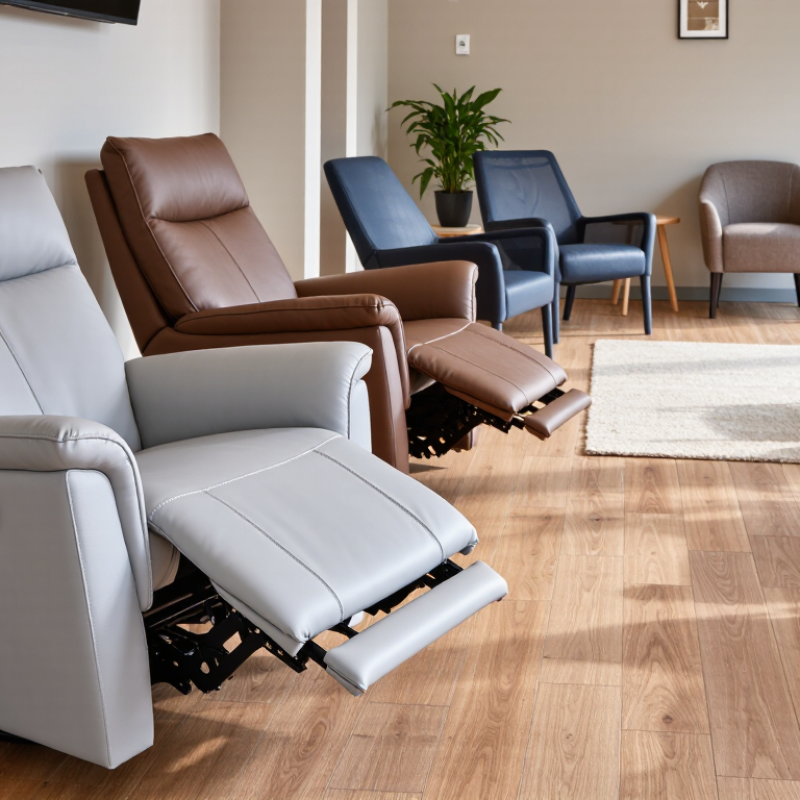
Small businesses use recliners in reception areas, staff lounges, quiet rooms, and client waiting spaces. A compact model can give visitors a comfortable place to sit without turning the room into a furniture showroom. Measure the chair fully reclined, not only upright; footrests can block walkways or drawers. For shared settings, check cleanability, weight capacity, and whether high-use parts can be serviced. ANSI/BIFMA X5.4-2020 provides performance and safety tests for public and lounge seating. It is a useful purchasing benchmark, not a guarantee of fit for every workplace.
Comfort deserves attention, but a recliner is not an ergonomic task chair. The U.S. Bureau of Labor Statistics reported 2.6 million nonfatal workplace injuries and illnesses in private industry in 2023. That broad figure does not show that recliners prevent injuries. It does remind buyers to consider the physical demands of work and provide seating suited to each activity. A plush chair may suit a short break, yet feel awkward for paperwork or frequent customer conversations. Fit matters.
Tips: Measure doorways and the chair’s reclined footprint before ordering. Check that the upholstery tolerates daily cleaning, and test the recline controls with the people who will use it. Keep a clear path around the chair. It is easy to focus on softness and overlook maintenance; that is a costly trade-off in a busy, small room.
Small businesses need recliners that fit the room and the work. Manual recliners avoid electrical setup; power models suit frequent adjustments, while wall-hugging designs can reduce rear clearance needs. Lift recliners may help visitors who struggle to stand, but they need stable flooring and accessible controls. Check each chair’s open footprint, not just its showroom width. Measure twice.
Plan circulation before choosing upholstery. The U.S. Access Board’s ADA Standards specify a 36-inch accessible route and a 30-by-48-inch clear floor space for wheelchair approach; use these figures when checking placement, while confirming which requirements apply to your space. For shared seating, ask for test documentation aligned with ANSI/BIFMA X5.4, the public and lounge seating standard. Specify wipe-clean fabric, reinforced seams, and replaceable controls or cushions where available. BIFMA testing helps assess durability, but it cannot predict every spill or heavy-use pattern. I would still test a sample in the actual room: a chair that reclines smoothly can block a doorway when fully extended.
Typical space-planning dimensions by recliner type
Approximate planning midpoints in inches, based on commonly available recliner size ranges. Actual dimensions vary by model; confirm chair width and required wall clearance with the product specifications before purchasing.
For small business buyers, a recliner should fit the room and the work it will do. Measure the doorway, chair footprint, and clearance behind the back before comparing options. A chair that blocks a walkway can cost more than its sticker price. Sit in it. Test the seat for at least ten minutes, with feet supported and shoulders relaxed. Check whether the controls are easy to reach without twisting.
Comfort varies by body size, so one quick showroom trial is not enough. Ask for the seat width, seat depth, reclined length, and weight capacity. For shared spaces, prioritize wipeable upholstery, reinforced seams, and a mechanism that moves smoothly under repeated use. Open and close the footrest several times. Listen for scraping or uneven movement. These checks are practical, but they do not replace written warranty and service terms.
Compare total cost, not just purchase price: delivery, assembly, cleaning supplies, and likely repairs all matter. Request details about warranty coverage, replacement parts, and service lead times. A cheaper chair may suit light use; daily use usually calls for sturdier construction. Still, durability can be hard to judge during a short visit. Note what you cannot verify, then compare a few options using the same checklist. Small businesses may value easy maintenance more than extra features.
A compact reception area needs a recliner that welcomes visitors without blocking the path to the desk. Look for a modest footprint, wipe-clean upholstery, and a firm seat that makes standing easier. Measure doorways and turning space before ordering. Fit matters. The U.S. Small Business Administration’s 2024 Frequently Asked Questions report says small businesses make up 99.9% of U.S. businesses. That range of workplaces makes a single “best” chair unlikely.
For a staff break room, prioritize durable fabric, simple controls, and a frame suited to frequent use. In a counseling or wellness room, a quieter recliner with supportive arms can feel less clinical. The Global Wellness Institute’s 2024 Global Wellness Economy Monitor estimated the sector at $6.3 trillion in 2023. That figure signals broad wellness investment, not proven demand for workplace recliners. Keep the distinction clear.
Boutique lodging and private-care settings may benefit from easy-clean surfaces and a restrained shape that suits the room. Ask suppliers for seat dimensions, weight limits, cleaning guidance, and warranty terms; compare them against your expected use. Test the recline in person if possible. A chair can look inviting but consume too much floor space when fully extended. I would also question whether staff will maintain a complex mechanism. If upkeep is uncertain, simpler may be better.
| Business Environment | Suitable Recliner Type | Typical Footprint | Upholstery to Consider | Useful Features | Estimated Unit Cost (USD) | Buyer Consideration |
|---|---|---|---|---|---|---|
| Small office or staff break room | Compact manual recliner | About 30–35 in. wide; allow roughly 60–70 in. from wall when fully reclined | Woven polyester or other durable, easy-care fabric | Simple lever or push-back operation; removable cushion covers where available | $250–$600 | Measure doorways and the reclined position before ordering. Manual models avoid the need for a nearby power outlet. |
| Clinic or therapy waiting area | Compact, upright-position recliner | About 30–36 in. wide; check the maker’s full-recline measurements | Wipe-clean coated upholstery suitable for the facility’s cleaning routine | Stable armrests, easy-to-clean surfaces, and a leg rest that returns smoothly | $350–$900 | Confirm that upholstery and cleaning products are compatible with the facility’s hygiene procedures; a recliner alone does not establish medical suitability. |
| Salon, spa, or wellness studio | Compact power recliner | About 32–38 in. wide; allow room for movement and the power cord | Wipe-clean synthetic upholstery or treated fabric | Quiet motor, straightforward controls, and accessible outlet placement | $500–$1,200 | Check cleaning instructions, cord routing, and whether the chair’s movement suits the service being offered. |
| Retail customer lounge | Space-saving wall-hugger recliner | About 30–36 in. wide; some designs need only a few inches of rear clearance, but verify the model | Durable fabric or wipe-clean upholstery suited to frequent use | Wall-hugging mechanism, sturdy arms, and an easy-to-operate recline control | $400–$1,000 | Plan for safe customer circulation and confirm the recliner does not obstruct accessible routes or exits. |
| Reception area or private consultation room | Compact upholstered recliner with restrained styling | About 31–37 in. wide; allow additional space for the footrest | Performance fabric or coated upholstery in a neutral color | Supportive armrests, a firm seat, and a reclining position that can be adjusted easily | $300–$850 | Choose a model that fits the room’s layout and is comfortable for visitors of different sizes; review the stated weight capacity. |
| Shared accommodation or staff recovery room | Power recliner with a compact frame | About 32–38 in. wide; provide clearance for both the recline and electrical connection | Easy-care fabric or wipe-clean synthetic upholstery | Accessible power controls, replaceable power components where supported, and a stable base | $550–$1,300 | Compare the warranty terms, expected maintenance, and availability of replacement parts before purchasing multiple units. |
Planning note: Prices and dimensions are indicative 2026 budgeting ranges, not quotes or specifications for a particular model. Actual cost, clearance, upholstery care, warranty, and weight capacity vary by product; verify details with the seller before purchase.
For a small business, a recliner must fit the room and the workday. Measure doorways, aisles, and the space needed for full recline before ordering. A chair that looks compact online may block a narrow walkway when opened. Check seat width, weight capacity, upholstery cleaning instructions, and whether replacement parts are available. Compare the delivered cost, not just the listed price; freight, assembly, and removal fees can change the budget. Details matter.
Tips: Keep the invoice, warranty, and care instructions together. Ask whether coverage applies to commercial use, and who pays for return shipping or on-site service.
Warranty terms deserve a close read. Confirm what is covered, for how long, and whether labor, mechanisms, fabric, and cushions have different limits. Do not assume a home-use warranty applies to a shared office or waiting area. Ask for written answers before purchase. For maintenance, vacuum seams and creases regularly, wipe spills promptly using approved cleaners, and inspect handles, bolts, and moving parts. Keep a simple service log. It may feel fussy, but it can reveal repeated wear before a chair becomes unsafe or unusable. Cleaning routines also vary by upholstery, so one product may not suit every surface. A perfect maintenance plan is unlikely; consistency is more useful.
